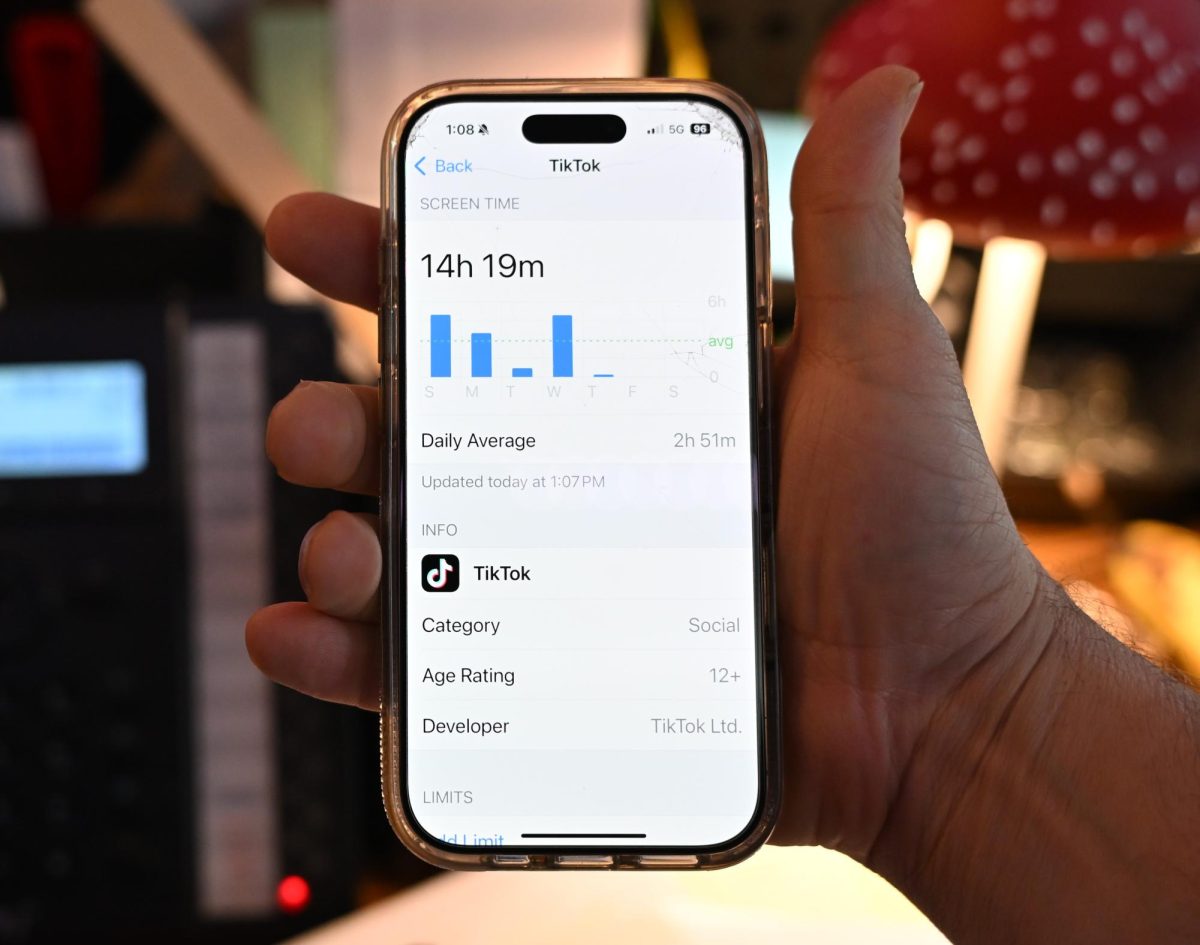
Johnathan Haidt is a sixty-year-old social psychologist who believes that smartphones are a threat to teens’ mental well-being.
In his 2024 book, The Anxious Generation, Haidt blames the spike in teenage depression and anxiety squarely on the rise of smartphones and social media, and he offers a set of prescriptions: no smartphones before high school, and no social media before age sixteen.
Tyrone Middle School counselor Matt Kimberlain agrees, at least in theory.
“As a dad with three teenagers as well as working as a School Counselor for the past 22 years, I can see where Haidt is coming from. However, our approach is more about education, time limits, and boundaries set upon our three kids as well as the students I work with, regarding their use of social media,” Kimblerin said.
The effects of social media have been a popular topic of discussion and controversy for the past few years. It has been studied across various age groups, particularly among teenagers.
Social media has significant negative effects on teens, such as high rates of anxiety, depression, and poor body image due to comparison and different forms of cyberbullying.
According to The Reach Institute, among 13- to 17-year-olds, up to 95% use social media, with one-third saying they use it almost constantly.
They also stated that the impact of social media on people’s body image, 46% of adolescents aged 13-17 said social media makes them feel worse.
Tyrone High School Guidance Counselor Nicole Taneyhill thinks that social media often encourages teens to compare themselves to unrealistic standards, and as a result, they begin to feel less confident about themselves.
“Being on social media for long periods of time can affect mental health in many ways. Social media does not accurately reflect people’s lives. There is a tendency to post highlight reels of life, and friends/followers begin comparing their own realities to a false sense of perfection showcased on others’ social media platforms. This comparison syndrome leads adolescents to feel a sense of less than or inadequacy. It’s very important for teens to have limited time on social media outlets to minimize such risks,” said Taneyhill.
Teens are pros at keeping themselves occupied in the hours before and after school, until way past bedtime, using social media.
Social media has caused many teens to struggle with social skills. They are so used to just texting people when they need something that it has become difficult for some teens to carry on a normal conversation in person.
Tyrone High School Counselor Jessica Koeck says that balance is key.
“There are both positives and negatives to social media and cellphones; however, excessive use may become problematic,” Koeck said.
Some of the most concerning issues from her perspective are the invasion of others’ privacy, access to misinformation, cyberbullying, and the impact that overuse has on a person’s overall physical, mental, and emotional health.
But according to Koeck, not everything about social media is detrimental.
“On the other hand, using social media allows for social connections with family, friends, and others, some of which we may not usually have. Social media can also raise awareness for social causes, open doors to networking opportunities, and provide a space for self-expression and creativity, Koeck said.
According to Tyrone high school students, they mostly use social media to communicate with their friends and family.
When a teen makes a post on social media, they are often looking for someone to like, share, or comment on it. When they don’t get the reactions that they want, it can frustrate them.
Most Tyrone High School students said that people sharing their social media posts makes them feel happy. However, many students also admitted that it can also make them feel stressed when they don’t get the level of engagement from their friends that they had hoped for.
An anonymous Tyrone High School student said, “Sometimes social media makes me unhappy when people use it to say unkind things about people or certain subjects.”
While it offers valuable opportunities for connection and empowerment, the impact of social media largely depends on how it is used, with both positive and detrimental consequences for mental health.
Like Koeck said, balance is key.